Is it better to have a limited slip or locking differential? Let us tell you right now, the question is not which differential is better, but which differential is better for you!
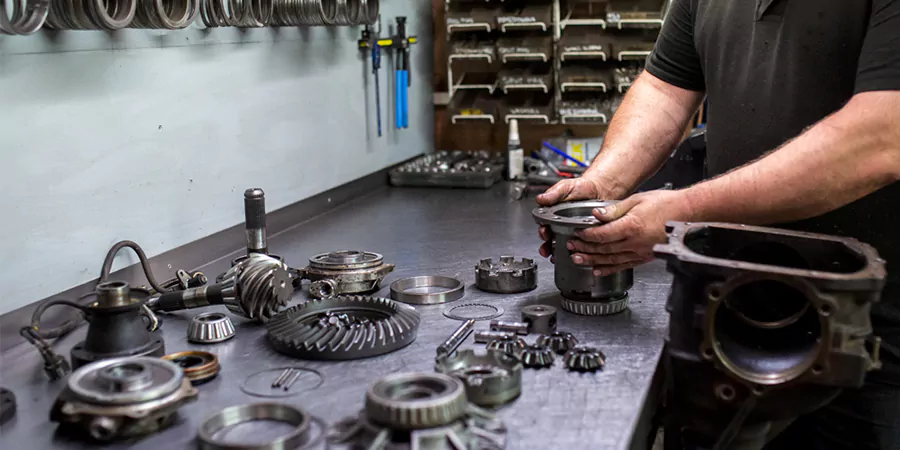
Both limited-slip and locking differentials are mounted on axles to allow for greater traction in environments where one wheel may lose traction and spin. Without a limited-slip or locking differential on an axle, when one wheel loses traction and spins, you may lose forward momentum while the other wheel(s) will spin.
• True two-wheel drive per axle
• No maintenance required
• Extremely durable
• Bolt-on application, no modifications to axles, ring and pinions, or half shafts
• Greatly enhances traction
Disadvantages of Locking Differentials
• Faster tire wear
• Front lock makes steering difficult
• Occasional banging or rattling from lockers
• Can make driving on snow or ice more difficult
Advantages of Limited Slip Differentials
• Enhanced traction in all weather and road conditions, including ice and snow
• No “squeaking”
• No accelerated tire wear
• Quiet operation (unless service is required)
Disadvantages of Limited Slip Differentials
• The two axles are not completely locked together
• Depending on the design, can be weaker (physically) than a locking differential
• Some limited slip devices can sometimes pull side to side in front axle applications
Conclusion
You have to decide which differential is best for you based on your use and vehicle application. Generally, we tend to use the vehicle’s intended use as the dividing line between a differential and a limited slip differential – if the vehicle is more for daily driving, choose a limited slip differential. If the vehicle is more for toy driving, choose a differential lock. If you need any help, please feel free to contact us, we are a specialized and experienced manufacturer of limited slip differentials and differential locker.