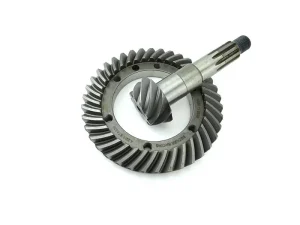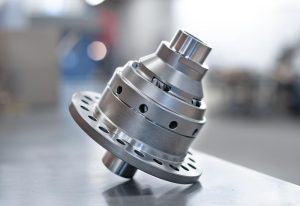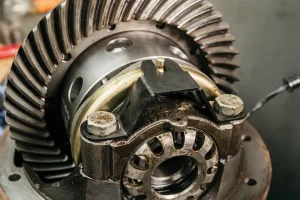
Why Your Gear Ratio Matters
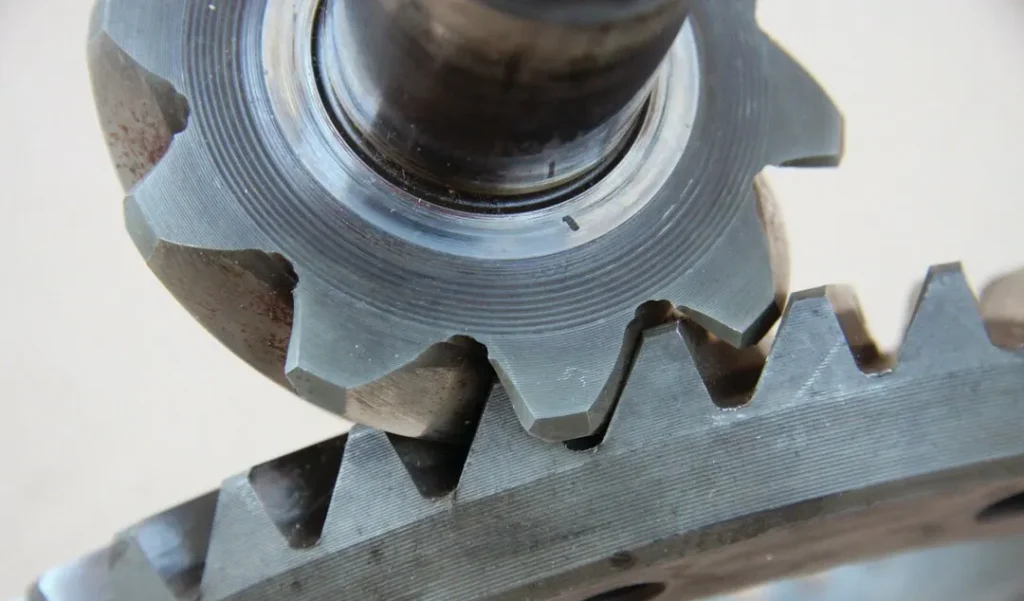
Method 1: Driveshaft Rotation Count (No Disassembly Required)
What You Need:
- Jack and jack stands
- Chalk or tape
- A helper (optional but helpful)
Steps:
- Lift both rear wheels and secure the car.
- Mark the tire and driveshaft.
- Rotate the tire two full turns, counting how many times the driveshaft spins.
- Multiply the driveshaft rotations by 2 (if both wheels turn freely), or just count directly if rotating both wheels together.
Example: If the driveshaft turns 3.73 times, your ratio is 3.73:1.
Method 2: Check the Axle Code on the Door Jamb
The easiest method—no tools required.
- Open the driver’s side door.
- Look at the manufacturer sticker on the door jamb.
- Find the axle code, usually a two-letter designation.
Here are common Ford axle codes:
Common Toyota Axle Codes (Hilux, Land Cruiser, Tacoma, 4Runner)
Toyota vehicles often list the axle code on the VIN plate inside the engine bay or on the driver’s door jamb. The code looks like A02A, where the first part indicates the differential type and the last character shows the gear ratio.
| Code | Ratio | Differential Type |
|---|---|---|
| A01A | 3.91 | Open |
| A02A | 4.10 | Open |
| A02B | 4.10 | Limited-Slip |
| A03A | 4.30 | Open |
| A03B | 4.30 | Limited-Slip |
| A04A | 3.58 | Open |
| B06A | 4.88 | Open (Heavy-Duty) |
| B06B | 4.88 | Limited-Slip |
Axle Code = Differential + Gear Ratio + LSD/Open Common Isuzu Axle Codes (D-Max, MU-X, Trooper)
| Code | Ratio | Type |
|---|---|---|
| G73 | 3.73 | Open |
| G80 | 4.10 | Open |
| G82 | 4.30 | Limited-Slip |
| G94 | 4.56 | Limited-Slip |
| G95 | 4.77 | LSD (Off-road) |
Common Mitsubishi Axle Codes (Pajero, Triton, L200)
| Code | Ratio | Type |
|---|---|---|
| 4639 | 4.875 | Open |
| 4632 | 4.625 | LSD or Hybrid LSD |
| 4651 | 5.285 | Off-Road LSD |
| 4731 | 3.917 | Open |
| 4741 | 4.100 | LSD |
Common Jeep Axle Codes (Wrangler, Cherokee, Gladiator)
| Code | Ratio | Axle Type |
|---|---|---|
| D30 | — | Dana 30 (front) |
| D35 | 3.07–4.10 | Dana 35 (rear) |
| D44 | 3.73–4.56 | Dana 44 (rear) |
| D60 | 4.10+ | Dana 60 (heavy-duty) |
| 3.21 | 3.21 | Open Diff |
| 3.73 | 3.73 | Open or Trac-Lok |
| 4.10 | 4.10 | Rubicon models w/ lockers |
Method 3: VIN or Axle Code Lookup Online
You can often find the gear ratio using your VIN number or axle tag if the factory data is still valid.
- Search for a VIN decoder specific to your brand.
- Or locate the axle tag on the differential housing.
- Enter the info into a manufacturer parts database or gear ratio chart.
Again, this works best for unmodified vehicles.
Method 4: Tire and Driveshaft Rotation (Rolling Field Test)
What You Need:
- Jack and jack stands
- Chalk or tape
- A helper (optional but helpful)
Steps:
- Mark one rear tire and the driveshaft.
- Roll the vehicle forward slowly while counting 10 full tire rotations.
- Count how many times the driveshaft turns during those 10 tire revolutions.
- Divide driveshaft turns by 10 to get your gear ratio.
Gear Ratio = 37.3 ÷ 10 = 3.73:1
Method 1 vs Method 4: Key Differences
- Use Method 1 if you want a more accurate gear ratio check and have access to tools.
- Use Method 4 if you need a fast, on-the-go estimation without equipment.
Both methods are based on the same principle — comparing wheel rotations to driveshaft rotations — but the difference in application and precision makes each suitable for different use cases.
Method 5: Calculate Tire Circumference and Use Math
Step 1: Calculate Tire Diameter
Use this formula:
Diameter = ((Tire Width / 100) × Sidewall Ratio × 2) / 25.4 + Wheel Diameter
You can also use the calculator below — just fill in the values to get the diameter automatically.
A 275/60R20 tire:
- Sidewall height = (275 / 100) × 60 = 165 mm = 6.5 in
- Diameter = (6.5 × 2) + 20 = 33 in
Then, calculate the circumference using:
Circumference = Diameter × π
Step 2: Estimate Gear Ratio
Compare the number of driveshaft rotations to distance traveled (using GPS or speed sensors).
For example, if your vehicle travels one tire revolution (103.6 inches) and the driveshaft spins 3.73 times, your gear ratio is 3.73:1.
Gear Ratio = 37.3 ÷ 10 = 3.73:1
Method 1 vs Method 4: Key Differences
- Use Method 1 if you want a more accurate gear ratio check and have access to tools.
- Use Method 4 if you need a fast, on-the-go estimation without equipment.
Both methods are based on the same principle — comparing wheel rotations to driveshaft rotations — but the difference in application and precision makes each suitable for different use cases.
Conclusion
You don’t have to open your diff to find your gear ratio. Between physical rotation tests, VIN or axle tag lookups, and tire math, you’ve got multiple accurate, non-invasive ways to get the number. Whether you’re a casual DIYer or a serious off-roader, knowing your ring and pinion gear ratio gives you the confidence to match parts, tune your setup, or verify what’s under your rig.